

When Good Work Feels Hard
Using Working Genius in Pastoral Supervision

Capable people can feel tired, frustrated or ineffective in work they care deeply about. Sometimes the demands of a role draw heavily on work a person can do well but does not find sustaining. Sometimes an important contribution is misunderstood, a team has skipped a necessary part of the work, or one person has begun carrying too much.
Working Genius gives us language to explore those possibilities with a supervisee. It does not tell us the whole story. Supervision makes room to hear that story in the context of a person's role, relationships, organisation and vocation.
A quick reminder of the model
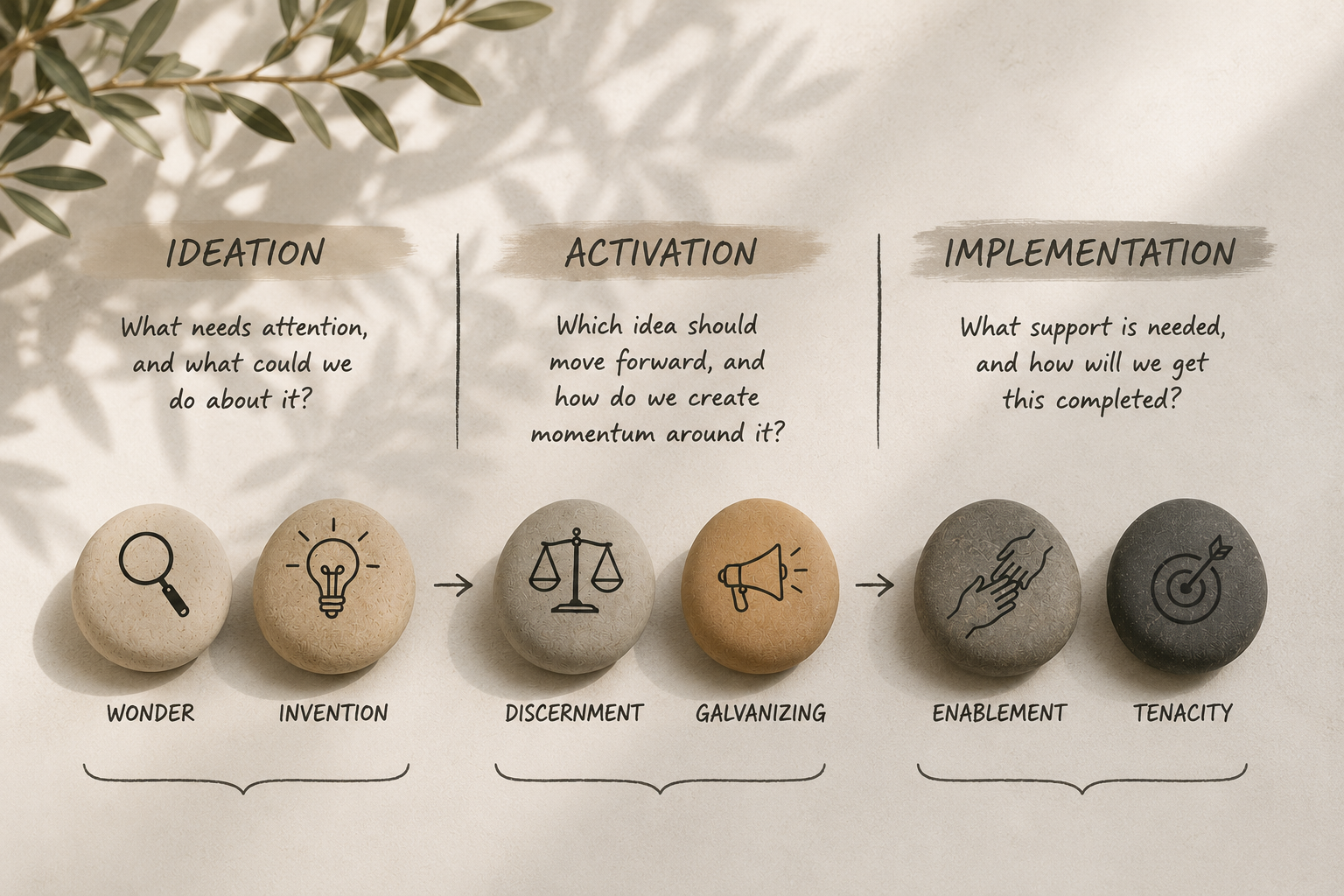
The Six Types of Working Genius, developed by Patrick Lencioni and The Table Group, describe six activities that help work move from an initial question to completion.
Each person's profile identifies two Working Geniuses that tend to bring energy, two Working Competencies they can perform without necessarily finding them sustaining, and two Working Frustrations that tend to drain them. The distinction between being good at something and being energised by it is often particularly helpful in supervision.
Three ways to listen differently in supervision
1. Notice where the supervisee's energy goes
A person may be praised for work they are perfectly capable of doing, while the repeated demand leaves them depleted. Ask about what they actually do across a week, what gives them energy, and what they do well at considerable cost. Keep workload, rest, authority and organisational expectations in view too. A Working Genius profile is not an assessment of burnout.
2. Notice what happens between people
One person's thoughtful question may sound like resistance to another. An invitation to act may feel premature to someone who still needs clarity. A willing helper may become the person everyone depends upon. Working Genius can help us become curious about the contributions beneath those interactions, without excusing harmful conduct or deciding what another person intended.
3. Notice what the work needs next
When a project stalls, ask which activity has had too little space. Does the team need to return to the question, generate options, test an idea, build commitment, provide support or define what completion looks like? The supervisee need not provide every contribution themselves. They may be able to invite someone else, make room for a different conversation or clarify a decision with the people who hold authority.
Questions to take into supervision
Energy and role
Which parts of your work leave you with a sense of energy or satisfaction?
What do people regularly ask of you because you are good at it? How does it feel to do that work repeatedly?
Where are your Geniuses finding room in your current role? Where are your Competencies or Frustrations carrying more of the load?
Relationships and team dynamics
When does your contribution seem to be understood and welcomed? When does it seem to be missed or misread?
What might your colleagues be trying to contribute that you experience as delay, resistance or pressure?
What expectations have grown around you because you are dependable, insightful, encouraging or willing to help?
The work and its next step
Where does this work tend to lose momentum?
Which kind of contribution might it need next, and who could offer it?
What would help you invite that contribution without taking responsibility for everybody's part?
Sustainability and limits
What is yours to carry in this role, and what needs to be shared or addressed by the organisation?
What would a small, realistic change look like over the next few weeks?
What else might explain how you are feeling that this model does not account for?
Stay in touch
If you’d like to receive occasional resources that I create for Supervisors and others to use in their reflective practice, or to continue the conversation, please feel free to share your details through the connect form or by signing up (below)